THE QUESTION
調査は何を問題とし、規制はどう変わったのかについて資料と証拠から何が確認できるのか。
STORY SO FAR
前回「環境被害はどこまで広がり、何が回復途上なのか」で確認した論点を受け、この回では調査は何を問題とし、規制はどう変わったのかについて資料と証拠から何が確認できるのか。を扱う。
Deepwater Horizon事故の原因を「セメント」「陰圧試験」「キック」「BOP」のどれか一つに決めると、事故後の改革がなぜ広範囲に及んだのか説明できない。
事故調査は、個別部品のfailureだけでなく、risk management、management of change、contractor interface、human factors、safety-critical equipment assurance、regulatory 構造、source-control readinessまで問題を広げた。
Joint Investigation Team(JIT)は、BP、Transocean、Halliburtonの行為に複数のoffshore safety regulation違反を認定した。CSBはさらに、三社のうち特にBPとTransoceanについて、major accident riskをsystematically管理する仕組みが企業方針として存在していても、Macondoで実効的に使われていなかったと分析した。
事故後、米国政府は旧Minerals Management Service(MMS)の機能を分割し、safety / environmental enforcementをBSEEへ、resource managementをBOEMへ、revenue collectionをONRRへ分離した。SEMSはmandatory化され、2016年にはWell Control Ruleが制定された。その後2019年改定、2023年改定を経て、BOP、well integrity、failure reporting、third-party reviewの規則は現在も更新され続けている。
つまりDeepwater Horizon後の改革は「BOPを強くした」で終わらない。事故のlessonは、一つのbarrierが壊れたとき、次のbarrierが本当に独立して機能するよう、組織・設備・規制をどう設計するかへ広がった。
CASE FILE 50|Deepwater Horizon事故 2010
最終回では、調査が何をsystem-level problemとしたのか、MMS再編、SEMS、Well Control Rule、BOP assurance、containment readiness、settlementまでを「事故後に何が変わったか」で整理する。
JITは誰に何を指摘したのか
BOEMRE / U.S. Coast Guard Joint Investigation Teamは、事故のdirect / contributing causesを調べ、BP、Transocean、Halliburtonのconductについて複数のfederal offshore safety regulations違反を指摘した。
BPに対しては、wellを常時controlするための必要なprecautionsを取らなかったこと、cementingでformation pressure / fluidsを適切にcontrolできなかったこと、pressure integrity test、BOP maintenance、temporary abandonment procedure approvalなどが問題になった。
Transoceanにはsafe and workmanlike operations、well control、BOP maintenance等に関する違反が指摘された。Halliburtonにもsafe operations、pollution prevention、well control、cementingに関する違反が出された。
この整理は「三社に同じ責任があった」という意味ではない。それぞれoperator、drilling contractor、cementing contractorとして役割とauthorityが異なる。
重要なのは、事故が一社の一部署だけで完結するsystemではなく、複数企業のengineering、operations、contract、approval、communicationが接続するmulti-party operationだったことだ。
CSBは「個人の判断ミス」より上の階層を見た
CSBはMacondo investigationで、well-control操作だけでなく過程 safety / major accident preventionの観点を強く打ち出した。
CSB Volume 3は、BPとTransoceanの双方にsafety management policiesがあったにもかかわらず、Macondoでは十分に実装されていなかったとする。
具体的には、human factorsの取り込み不足、previous incidentsからのorganizational learning不足、major accident riskを誰が管理するかというroles / responsibilitiesの不明確さ、ALARP(As Low As Reasonably Practicable)までriskを低減する社内要求の不十分な実行などを挙げている。
さらにCSBは、safety performanceをpersonal injury rateのような指標だけで判断すると、low-frequency / high-consequenceのmajor accident riskを見失うと指摘した。
「けが人が少ない」「days without lost-time injuryが続いている」ことは重要だが、well barrier、BOP、negative test、kick detectionというcatastrophic hazard barriersが健全かどうかを直接示すわけではない。
March 8のkickをorganizational learningへ変えられなかった
第5回で扱ったように、Macondoでは4月20日以前の3月8日にもkick detectionが遅れた。
CSBは、BPがincident-reporting systemを使ってsystem-level causesを特定し、corrective actionsをtrackする形でこのeventを十分活用しなかったと指摘している。
Transoceanでも、別rig Sedco 711でhydrocarbon influxへのresponse delayが起きていたが、そのlessonが全社的に十分disseminateされなかった。
ここでの問題は「過去に同じ事故があったのに忘れた」という単純な話ではない。
near missやless-severe eventを、local correctionで終わらせず、barrier weaknessとして組織横断で共有し、procedures、training、monitoring、designへ戻す仕組みが必要だった。
management of changeはなぜ重要だったのか
Macondo temporary abandonment planは事故前の短期間に複数回変更された。
CSBは、planが直前のweekに5回変更されたにもかかわらず、そのchangesへformal management-of-change 過程やhazard assessmentが十分適用されたdocumentationが見つからなかったとした。
個々の変更には、それぞれ合理的な理由があり得る。
問題は、変更A、B、Cを別々に評価しても、組み合わせた最終configurationが新しいriskを作る可能性があることだ。
temporary abandonmentでは、cement barrier、negative test、mud displacement、surface plug、riser removalが順番に依存している。procedure changeは単なるschedule updateではなく、barrier sequenceそのものを変える。
operatorとcontractorの境界がmajor accident riskを曖昧にした
Deepwater HorizonはTransoceanが所有・運用し、Macondo wellのoperatorはBPだった。Halliburton、MI-SWACO、Schlumbergerなど複数contractorsも作業に関与していた。
CSBはmulti-party risk managementで、BPとTransoceanの間にmajor accident riskに関するroles / responsibilitiesが十分明確でなかったと評価した。
両社をつなぐbridging 文書は存在したが、CSBはmajor accident hazardsをsystematically統合する文書としては不十分だったとした。
offshore drillingでは「operatorがdesign」「contractorがexecution」という分担だけで責任を完全に切れない。
well conditionはreal timeで変わり、rig crew、operator representative、shore-based engineer、service companyがそれぞれ一部のdataとauthorityを持つ。
だから事故後のSEMSは、contractor interface、stop-work authority、ultimate work authority、employee participationなどをmanagement systemとして明確にする方向へ進んだ。
MMSはなぜ分割されたのか
Deepwater Horizon前のMinerals Management Service(MMS)は、offshore resource development、safety / environmental oversight、revenue collectionを広い組織の中で担っていた。
事故後、Department of the Interiorはこの構造自体をreformした。
2010年5月、旧MMSを三つの機能へ分ける方針が示され、最終的にBSEE、BOEM、ONRRへ再編された。
- BSEE:safety / environmental enforcement、permitting、inspection
- BOEM:offshore resource management、leasing、environmental analysis
- ONRR:energy revenue collection / management
BSEEは2011年10月に正式発足した。
分割の狙いは、resource development / revenueとsafety enforcementという異なるmissionsを一つのagency内で抱える構造を解消し、safety regulatorとして独立したfocusとtechnical expertiseを持たせることだった。
SEMS I|安全管理を「自主推奨」からmandatoryへ
Safety and Environmental Management Systems(SEMS)の考え方自体はDeepwater Horizon以前から存在した。
API RP 75は1990年代からoffshore operations向けのmanagement-system approachを示していたが、長くvoluntary frameworkとして扱われていた。
Deepwater Horizonの数か月後、2010年10月にSEMS final ruleが公布され、API RP 75の要素がmandatory requirementになった。
現在のBSEEはSEMSの目的として、human errorとpoor organizationがincidentへ与える影響へのfocus、continuous improvement、performance-based practicesなどを明示している。
SEMSは「checklistを増やす規則」ではない。hazard analysis、management of change、operating procedures、training、mechanical integrity、emergency response、incident investigation、auditingなどを一つのmanagement cycleとして動かすことが目的である。
SEMS II|stop workとthird-party auditを強化
2013年にはSEMS IIが制定された。
BSEEの現在の説明では、SEMS IIはAPI RP 75に加えて次のrequirementsを強化した。
- Job Safety Analysisのsignature / approval
- accredited Audit Service Providerによるaudit
- Stop Work Authority(SWA)
- Ultimate Work Authority(UWA)
- Employee Participation Plan
- Reporting Unsafe Working Conditions
Stop Work Authorityは、unsafe conditionを見たworkerがoperationを止める権限をsystemとして明示する。
Ultimate Work Authorityは、緊急時に誰が最終判断を持つかを明確にする。
Deepwater Horizonのようなmulti-company operationでは、「誰かが止めるだろう」「operator representativeに聞かなければ」「rig sideでは判断できない」というauthority ambiguity自体がriskになるため、この二つは重要である。
ただし、SEMSを導入すればrisk managementが自動的に機能するわけではない
CSBは2016年のfinal Macondo 報告書で、post-Macondo reformsを評価しつつも、regulation complianceだけではmajor accident risk reductionに不十分だと警告した。
特に、企業がsafety management systemを「文書が揃っているか」で管理すると、実際のbarrier healthやrisk reductionから離れる可能性がある。
BSEE自身も2024年の4th-cycle SEMS audit analysisで、operatorsはSEMSのfoundationを概ね構築している一方、operational consistencyにchallengeがあり、Corrective Action Planでobservable symptomだけでなくsystem root causeをaddressすることが重要だとしている。
つまり事故後のlessonは、「SEMSという書類を持つ」ではなく、establish, implement, maintainを継続することにある。
Drilling Safety Rule|cement・barrier・well controlを具体的に強化
事故直後のregulatory reformには、management systemだけでなくprescriptive technical requirementsも含まれた。
BSEEのDrilling Safety Ruleは、casing / cementing standards、integrity testing、third-party certification / verification、BOP capability / testing / documentation、well-control trainingなどを強化した。
またwell-control barriersのclassification、cement testing、dual mechanical barriers、completion / workover / decommissioningでのBOP / well-control fluids requirementsも整理された。
Macondoではcement barrierとnegative testが最初のcritical failuresだったため、「barrierがあること」ではなく「testによってbarrier integrityを証明すること」へregulatory emphasisが強まった。
2016 Well Control Rule|BOPをsystemとして規制する
2016年、BSEEはBlowout Preventer Systems and Well Control Rule、いわゆるWell Control Ruleをfinalizeした。
このruleはBOPだけを対象にしたものではなく、well design、drilling margins、real-time monitoring、BOP system design / testing / maintenance、third-party verificationなどを包括的に扱った。
BSEEは当時、Deepwater Horizon後でもっともsignificantなsafety / environmental reformの一つと位置づけた。
10のAPI standardsをregulationへincorporateし、業界practiceを法的requirementsとして扱う範囲も広げた。
2019年改定と、2023年の再改定
Well Control Ruleは制定後も固定されなかった。
2019年、BSEEは2016 Ruleの342 provisionsをreviewし、約20%をrevisionした。[5]BSEEは当時、data-driven improvementsとregulatory burden reductionを両立すると説明した。
その後2023年、Department of the Interior / BSEEは2019 changesの一部をrevisitし、Well Control Ruleを再改定した。
2023 final ruleでは、特に次のようなrequirementsが強化された。
- BOPが原則としてmaximum anticipated surface pressureに対しwellboreをclose / sealできること
- BOP failure dataをdesignated third partyとBSEEへ報告書
- incident後90日以内にfailure analysis / investigation開始
- independent third-party qualificationsをpermit applicationとともにBSEEへ提出
- 特定条件でdual shear ram requirementsを適用
- ROVが各shear ramをopen / closeできる能力
- BSEEがtestを立会えない場合、BOP test resultsを72時間以内に提出
第6回で扱った「BSRがoff-center pipeをsealできなかった」「control systemにlatent defectsがあった」というlessonが、現在のBOP assuranceとfailure-data requirementsへつながっている。
2026年時点|規則はさらに見直し中
2026年9月13日時点で、2023 Well Control Rule自体をさらに見直すrulemakingが進行している。[6]
RIN 1014-AA63は「Revisions to the 2023 Blowout Preventer Systems and Well Control Rule」とされ、reporting / recordkeeping requirementsのclarificationやduplicative submissionsの削減などを目的としている。
ただし、ここは現在進行形である。
Reginfoのcurrent agendaではAA63はProposed Rule Stageにあり、final ruleとして確定済みとは扱えない。
したがって2026年現在の説明では、「2023 Ruleがすでに消えた」「2026 Ruleへ置き換わった」とは書けない。[6]
同様にSEMSでも、API RP 75 fourth editionへのupdate等を扱うrulemakingが2026 agendaにあるが、これもproposed stageの項目を含む。
offshore regulationはDeepwater Horizon後に一度完成したのではなく、政治・技術・incident data・industry practiceに応じて改定が続くregulatory systemになっている。
containment readinessも「現場で考える」から事前準備へ
Article08で見たように、Macondoではcontainment dome、RITT、LMRP cap、capping stackなどを事故後に次々設計・deployした。
事故前、deepwater subsea blowoutへ迅速に使えるstandardized capping / containment resourcesは十分preparedされていなかった。
事故後、BSEEはoperatorsにsubsea containment resourcesへaccessできるcapabilityを求め、capping stack deployment exercisesも実施している。
source-control readinessは、事故が起きてからengineeringを始めるのではなく、equipment、vessel、ROV interface、deployment procedure、pressure testまでを事前にverifyする方向へ変わった。
法律上のaccountabilityはどうなったのか
事故後のresponseはregulationだけではなくenforcement / settlementにも及んだ。
EPAの現在のenforcement summaryでは、BP Exploration & Productionとのsettlementに、record-settingの$5.5 billion Clean Water Act penaltyと、natural resource damagesとして最大$8.8 billionが含まれる。
この金額は「罰金だけで総額14.3 billion」という意味ではない。Clean Water Act civil penaltyとNRDA restoration fundingは法的目的が違う。
自然資源damage分はArticle09で扱ったrestorationへつながり、civil penaltyはlaw enforcement / deterrenceの側面を持つ。
またDeepwater Horizonをめぐるlegal actionはEPA enforcementだけではなく、criminal matters、private claims、economic loss、medical claimsなど多数に分かれている。したがって単一settlement amountで事故全体のlegal accountabilityを表すことはできない。
調査機関は同じ結論だったのか
JIT、U.S. Coast Guard、National Commission、CSBは、同じ事故を違うmandateで調べた。
JITはoffshore regulationとwell-control operations、USCGはmarine casualty / fire / evacuation / vessel safety、National Commissionはgovernment / industry system全体、CSBは過程 safety / human and organizational factorsを重視した。
そのため、detail reconstructionやrecommendationに差はある。
たとえばBOPのBSR activation timingはJIT/DNVとCSBで異なるreconstructionがある。
一方、system-levelでは共通点も多い。
- barrier integrityを確認する仕組みが弱かった
- 異常dataがsafety-critical 判断へ正しくつながらなかった
- management of change / risk assessmentが不十分だった
- operator / contractor interfaceがmajor hazard管理を複雑化した
- BOPのemergency performance assuranceが不十分だった
- regulator側にもorganization / technical oversight改善が必要だった
つまり、調査間のdifferenceは「誰かが間違っている」と見るより、異なるsystem layerを見ていたと理解した方が正確である。
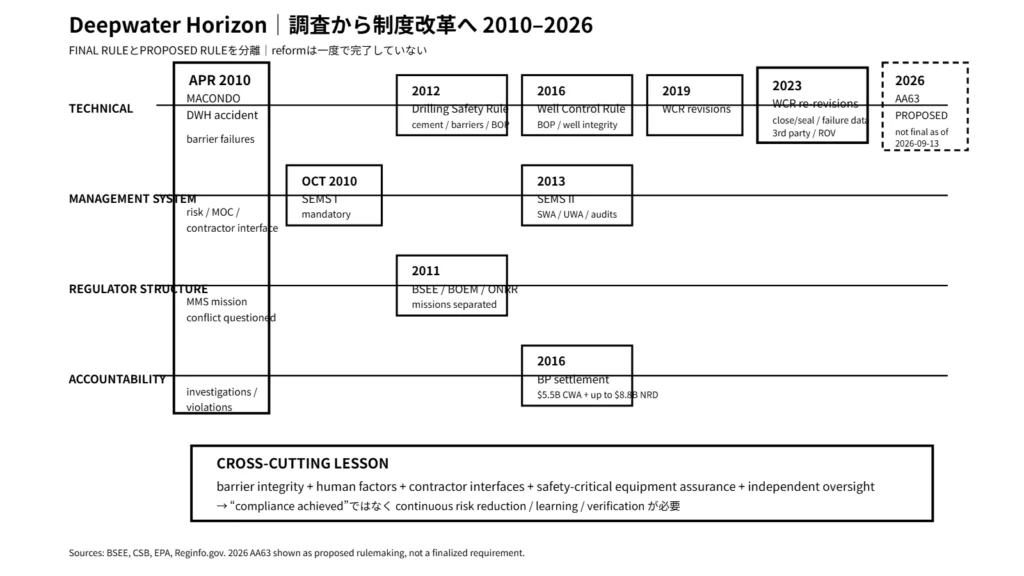
技術図|事故前から2026年までのreform chain
この記事の図では、2010事故前の構造から2026年現在までを一本の制度時系列で示す。
- Pre-2010:MMS統合構造 / SEMS voluntary framework
- Apr 2010:Deepwater Horizon / Macondo blowout
- Oct 2010:SEMS I mandatory
- 2011:BSEE / BOEM / ONRR分離完了
- 2012:Drilling Safety Rule final
- 2013:SEMS II
- 2016:Well Control Rule / BP settlement
- 2019:Well Control Rule revisions
- 2023:Well Control Rule re-revisions / strengthened provisions
- 2026:AA63等、さらなるrevisionsはproposed stage
時系列の下段には「TECHNICAL」「MANAGEMENT SYSTEM」「REGULATOR STRUCTURE」「ACCOUNTABILITY」の4レーンを置き、事故後改革が一分野だけではないことを示す。
検証ポイント|Deepwater Horizon後に「同じ事故は起きない制度」になった?
そこまでの保証はない。
事故後、regulator分離、SEMS mandatory化、well-control rules、BOP assurance、containment readinessなど大きな改革が行われた。
BSEEはSEMS導入後、reportable injury / incident ratesにはgeneral reductionが見られるとする一方、operational consistencyやroot-cause corrective actionsにはchallengeが残ると説明している。
CSBも、regulation complianceだけではmajor accident riskを十分reduceできないと繰り返し指摘した。
high-hazard systemでは「ruleを守ればzero risk」にはならない。
必要なのは、barrier performanceをmonitorし、near missesから学び、operations changeをrisk assessmentへ戻し、equipment failure dataを共有し、regulatorとindustryが新しい故障形態へ追随するcontinuous 過程である。
CASE050全体で見えた「事故の形」
Deepwater Horizon事故は、単独のhuman errorでも、単独のmechanical failureでもなかった。
production casing下部のcement barrierはhydrocarbonsを止められなかった。negative pressure testは異常を示したが成功と解釈された。kick warning signsはsurface operationsの複雑さの中で十分早く統合されなかった。BOPは最後にoff-center drill pipeを完全にshear / sealできなかった。
その後、爆発・火災の中で115人が生還した一方、11人が死亡した。海底からのflowを止めるには87日かかり、wellをeffectively sealするまでさらに約2か月を要した。environmental restorationは2026年現在も続いている。
これらを一つの因果線にすると、事故の本質が見える。
barrierが複数あっても、それらが同じassumption、同じ情報不足、同じorganizational weaknessに依存していれば、本当の意味で独立したbarriersではない。
Deepwater Horizonのlessonは「perfectな一枚の壁を作る」ことではなく、design、procedure、human 判断、emergency equipment、management system、regulationという異なる層を、互いに補完する独立した防護として維持することにある。
まとめ|規制改革が変えたもの、変え続けるもの
Deepwater Horizon後、米国のoffshore safety systemは大きく変わった。
MMSの広い任務はBSEE、BOEM、ONRRへ分離された。SEMSはvoluntary recommendationからmandatory management systemへ変わり、SEMS IIでstop-work authority、ultimate work authority、third-party audits等が強化された。
Drilling Safety RuleとWell Control Ruleはcasing / cementing、well barriers、BOP design / testing、third-party verification、failure data、ROV capabilityなどを具体的に強化した。subsea containment resourcesも事前preparednessとして制度化が進んだ。
同時に、BP settlementはClean Water Act penaltyとnatural-resource restoration fundingという形でlegal / financial accountabilityを残した。
しかしregulationは完成品ではない。2023 Well Control Ruleは2026年にもrevision proposalの対象であり、SEMS requirementsもupdateが検討されている。
事故から16年後に残る最も重要なlessonは、rulebookの一行ではない。
重大事故を防ぐsystemは、過去の事故から得たbarrier failure informationを、設備・人・組織・規制へ繰り返し戻し続けなければ弱くなる。
Macondoは、最初のbarrier failureから最後のBOPまで複数回「止める機会」が存在した事故だった。その事実こそが、CASE050全10回を通じた中心である。
CASE FILE 50|全10回
- Deepwater Horizon事故とは何だったのか
- Deepwater Horizon事故|水深約1500mのMacondo井では何をしていたのか
- Deepwater Horizon事故|セメントと坑井障壁はなぜ破れたのか
- Deepwater Horizon事故|陰圧試験はなぜ「成功」と判断されたのか
- Deepwater Horizon事故|キックはどう暴噴へ進んだのか
- Deepwater Horizon事故|BOPはなぜ最後の壁になれなかったのか
- Deepwater Horizon事故|爆発後、126人はどう退避したのか
- Deepwater Horizon事故|87日間の流出はどう止められたのか
- Deepwater Horizon事故|環境被害はどこまで広がり、何が回復途上なのか
- 現在の記事:Deepwater Horizon事故|調査は何を問題とし、規制はどう変わったのか
FACT CHECK|出典・参考資料
- [1] BOEMRE / U.S. Coast Guard Joint Investigation Team, Deepwater Horizon Final Report Volume II / BSEE violation notices BP、Transocean、Halliburtonに対するregulatory findings、well control / cement / pressure test / BOP maintenance等の整理に使用。
- [2] U.S. Chemical Safety Board, Macondo Investigation Reports Volumes 3 & 4 human factors、organizational learning、ALARP、major accident risk、operator-contractor interface、safety-critical elements、regulatory oversightのsystem-level analysisに使用。
- [3] BSEE, Organizational History / Reorganization of former MMS BSEE、BOEM、ONRRへの機能分割とregulatory mission分離の確認に使用。
- [4] BSEE, Safety and Environmental Management Systems (SEMS) SEMS I / II、Stop Work Authority、Ultimate Work Authority、third-party audits、employee participation等のcurrent regulatory historyに使用。
- [5] BSEE, Drilling Safety Rule / Well Control Rule casing / cementing、barrier testing、BOP capability、third-party verification、2016 / 2019 / 2023 rule changesの確認に使用。
- [6] BSEE / Reginfo, 2026 AA63 rulemaking 2026年9月時点で2023 Well Control Rule revisionsがProposed Rule Stageであることの確認に使用。
- [7] U.S. EPA, Deepwater Horizon enforcement overview $5.5B Clean Water Act penaltyと最大$8.8B natural resource damagesの確認に使用。
Deepwater Horizon事故|原油流出はなぜ拡大したのか 第10回 全10回 全10回を見る
- 01 Deepwater Horizon事故とは何だったのか
- 02 Deepwater Horizon事故|水深約1500mのMacondo井では何をしていたのか
- 03 Deepwater Horizon事故|セメントと坑井障壁はなぜ破れたのか
- 04 Deepwater Horizon事故|陰圧試験はなぜ「成功」と判断されたのか
- 05 Deepwater Horizon事故|キックはどう暴噴へ進んだのか
- 06 Deepwater Horizon事故|BOPはなぜ最後の壁になれなかったのか
- 07 Deepwater Horizon事故|爆発後、126人はどう退避したのか
- 08 Deepwater Horizon事故|87日間の流出はどう止められたのか
- 09 Deepwater Horizon事故|環境被害はどこまで広がり、何が回復途上なのか
- 10 Deepwater Horizon事故|調査は何を問題とし、規制はどう変わったのか